by Fern Shaw | Apr 22, 2014 | Health and Hydration
Unless you’ve been buried in a snow drift for the past, oh – 100 years – I think you may have noticed the raging debate about global warming.
Having watched this debate and its proponents and opponents with interest over the last 15 years or so, I came to the conclusion recently that if there are 2 people in a room with no external influences whatsoever, where potentially they could actually get on famously, throw in the words ‘global warming’ and watch the feathers fly.
The further conclusion that I draw from this is that people seem to have to have something to argue about – irrespective of whether they are versed on the topic or not. From Donald Trump through to David Cameron, everybody has an opinion it seems.
Before we get ahead of ourselves though, perhaps it’s a good idea to clarify the difference between weather and climate.
This from Jeff Schweitzer at The Huffington Post:
‘Climate describes atmospheric behaviour averaged over long time periods of decades and centuries across large geographic areas. Weather describes actual local atmospheric conditions over short periods of time, from hours to days. Weather is all about the actual state of the atmosphere with respect to wind, temperature, moisture, pressure, cloud cover and other instantaneous measurements. Climate is a composite of weather conditions averaged over many years. Think of weather as a single datum point and climate as a large collection of those data. Better yet, think of weather as a one-night stand. Then climate would be raising the kid resulting from that night for the next two decades. One immediately leads to the other, but the two are completely different phenomenon. And that is why we have two distinct fields of study: meteorology and climatology.’
Right, so now that I’ve flung the proverbial cat in amongst the pigeons with that clarification, you lot can thrash it out amongst yourselves. Me, I’m going to make up some placards, go and lurk near the water cooler and pick a fight with the first person that mocks my manifesto.
by Fern Shaw | Mar 26, 2014 | water cooler, Water Coolers
Last week I was sitting in my cubicle minding my own business, when Larry the Lurch came trundling past with a trolley.
The load was covered in one of those scary (but super useful) grey blankets movers tend to use. It slipped a bit and there was a flash of bright colour.
‘What ho?’ says I to Larry.
‘None of your beeswax’, came the reply.
Talk about waving a red herring in front of a carnivorous cat! I was off my stool and after Larry quicker than a flash.
Anyhow, after a minor scuffle, some choice language and a dressing down from the powers, I uncovered the hidden gems.
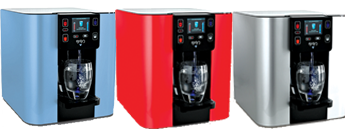
So, with much fanfare, a dash of facts and much hulabalooing, allow me to introduce AquAid’s latest little water cooler beauties:

The AquAid H-Duo is stylish, affordable, comes in a range of colours to suit any decor and offers unlimited amounts of both boiling and chilled filtered water.
Designed especially for the UK market, the model sits on your work surface and fits neatly under all overhead kitchen and office cupboards. As part of the package AquAid offers the complete service. WE do the installation, WE change the filters and in that rare event anything should go wrong, WE offer a guaranteed next-working day service call out.
What colours does the AquAid H-Duo come in?
The AquAid H-Duo comes in 10 gorgeous colour options. Silver, cream, black, bright red, dark red, yellow, lime green, blue, purple or orange. Simply enlarge any of the stylish AquAid D-duo’s on this page to see an enlarged version of the colour options.
Do I have to fill the AquAid H-Duo with water myself, like my coffee machine?
No, the beauty of the AquAid H-Duo is that it’s simply plumbed into your mains water supply. It automatically refills as you take water from it, so it is always ready to go, for both boiling and chilled water.
How much water will the AquAid H-Duo produce?
The AquAid H-Duo will produce 7 Litres per hour of chilled water. It will also produce 15 Litres of hot water. We recommend the H-Duo for offices with up to 15 staff.
How hot is the water when it is dispensed from the AquAid H-Duo?
With its unique ‘superhot’ button, the H-Duo can dispense water at temperatures as high as 98 ºC. This is the same temperature as a typical kettle dispenses water at.
How big is the AquAid H-Duo?
The AquAid H-Duo measures 32.5cm high, 30cm wide and 35cm deep. The dispensing spout is 23cm high.
How often do AquAid change the filters?
Our engineers will visit you every six months to change the appropriate filters, ensuring you always have clean, filtered water available.
Is the AquAid H-Duo difficult to operate?
The AquAid H-Duo has a state of the art touch screen panel. To dispense water, you simply choose whether you would like hot or cold water.
How do I clean it?
Simply wipe the AquAid H-Duo down with a damp cloth. The drip tray can be removed and cleaned separately.
It is energy efficient?
The AquAid H-Duo has an energy efficient, CFC-free cold water system and a powerful hot water system, yet both cost as little as 10-15p per day to run.
There you have it. Aren’t they grand? If you’d like one, contact AquAid and let us know which one of these little wonders you’d like. We’ll be happy to help.
by Fern Shaw | Mar 26, 2014 | Health and Hydration, water cooler, Water Coolers
I know, I know, I know. I do carry on (and on and on) about how very crucial water is, and I blog about it from every conceivable and (some rather inconceivable) perspectives, but the fact is – it is.
Putting this all into perspective:
Apparently a water pipe burst near my hoos the other day. Turned on the tap to wash the dishes and all I got was this rather impressive gurgling and rather scary pipe rattling. Then, my tap turned into a Spitting Cobra of brown muck. Then, nothing. It was the weekend. None of the neighbours had water either. So;
- no water to drink;
- no water to make a cuppa (which was my next task after doing the dishes);
- no water to wash my hands (bit of a clean hands phobic, me);
- no flushing the loo;
- no water to shower with, which meant I grunged my way into work on Monday (don’t imagine it, it was pretty awful);
- no water to give to the animals; never mind considering watering the plants. Just NO WATER.
Of course, for me as a town dweller, worst case scenario was that I hoof it off to a friend or the shops and buy bottled water. Except, then of course, the rather Scottish part of me had an internal whinge about using bottled water to wash my face with – wastage – perish the thought! Also, with it being rather warm down our way at present, I started getting a little precious and thinking about how thirsty I was. I made up scenarios in my head of me classic desert-scene-leopard-crawling down the street, gasping, ‘Water …. waterrr … waterrrrrr!’ then my head lowering , as I sagged into helplessness – fade out. Eventually, I got over myself and realised the impact of having no water had on me, and then it really struck home.
If that was just me without water for a few hours, try, if you can, to imagine what it is like to not only not have water on tap, but no water anywhere near you, for days. I think, then one begins to realise the importance of water from a very different perspective:
- How by you, dear, dear Customer, purchasing your water coolers translating into money meaning that we are able to donate towards charities like The Africa Trust that build life-saving Elephant Pumps;
- Meaning that people’s lives are literally saved and;
- How these contributions can honest to goodness make the difference between life and death and a future filled with that most precious of necessities – hope.
After this little brain-stretching exercise, I truly am going to be a lot less whiny about having no water and how ‘badly’ it affected me.
Perspective – she’s a bit of a meany.
by Fern Shaw | Mar 17, 2014 | Water, water cooler, Water Coolers
I’ve been known to disembowel clocks that tick (not disarm ticking clocks – that I leave to the brave people of the Bomb Squad). I’ve also run around strange houses and tightened taps almost to the point of stripping the thread because I cannot abide what I call ‘Lazy Person Water Torture’. I recently saw an episode of some series where the main protagonist takes a golf club to a dripping tap and then his wife repairs the tap – how’s that for an equal household!
Now you know what to do when it comes to your water cooler having a dripping spigot – you just call us.
In these other instances however, I’m not quite sure what remedy to suggest. Have a gander:
When a truck carrying construction glue collided with a bus in Chengdu City, China, it dowsed the street with its sticky contents. Firefighters tried – unsuccessfully – to remove the glue by diluting it with water guns and some observers even were stuck in it. The adhesive was finally dissolved using chemicals.
In the past few years, honeybees have spilled onto highways in Montana, Canada and California, where 10 million to 16 million angry buzzers responded by stinging firefighters, police and drivers. Honeybee hives are regularly shipped to farms around the country to pollinate crops, since colony collapse disorder has decimated local bee populations.
Apparently, years ago, there was a lot of mackerel transported from Devon and Cornwall to Grimsby in tipping trailers and a few times the locking catches were not strong enough and the loads ended up on the road where the truck drivers parked for their rest. On one occasion a car stopped sharply for no apparent reason and the fish carrying lorry stopped just as quickly and the fishy load came over the lorry and into the car.
While it may not grow on trees, money has flooded public streets on multiple occasions. In 2004, an armoured truck crashed on the New Jersey Turnpike, spilling $2 million in coins. In 2005, another truck caught fire in Alabama, spilling $800,000 in quarters. And in 2008, a driver on his way to the Miami Federal Reserve fatally crashed, spewing $185,000 in nickels.
And, my favourite:
In 2000, millions of the popular LEGO plastic toys went for a swim when a ship hit by a rogue wave dumped a container full of them overboard. The beloved blocks have now bobbed through the Northwest Passage to the shores of Alaska, one scientist calculates.
I have this vision of remote mini communities somewhere in the world who now have brightly coloured homes due to this. But that’s just me.
Perhaps you won’t feel as bad about mistreating your water cooler after reading about these rather epic spills. That said, be nice to your water cooler! They do after all, keep you hydrated rain or shine.

by Fern Shaw | Mar 17, 2014 | Charity, Guest Blog, Water, water cooler, Water Coolers
Help in Hearing, an independent, family-run business in Buckinghamshire, have assisted countless people with their hearing over the past 14 years.
They offer a variety of services from a free hearing test at their hearing clinics as well as a free online hearing test to many hearing-related issues.
They also believe in extending their values through to their Corporate Social Responsibility and through their contract with AquAid in having water coolers, have been donating monthly to The Africa Trust.
In doing so, these donations to The Africa Trust have been used to build fresh drinking water wells in areas in Africa where it is needed most, like in schools and villages.
As a result of these donations, Help in Hearing will be having its very own Elephant Pump built in Africa.
The Elephant Pump is a water well that is a modified version of an age-old Chinese rope pulley system and it is built with the assistance of the people of the area who are then taught how it works and how to repair it using local materials and parts.
This is essential to ensure clean and safe water is part of their daily lives.
We, at AquAid, are looking forward to being able to present Help in Hearing with photos of their very own well in the near future.