by Fern Shaw | Dec 10, 2025 | aquaid, Water, water cooler
Did you catch the double meaning? Clever you if so. If not: real fir trees need you to water them … and then there are Christmas trees actually made of water. Granted, those involve more plumbing, jets and fountains than most of us have lying around, but you get the picture.
It’s fairly obvious that I love Christmas. Not the commercial chaos that pops up in shops from early October (or, in one horrifying case, late September), but everything else? Count me in. For me – and millions of other festive humanoids – Christmas doesn’t begin until the tree is up.
A couple of years ago I went slightly off piste. I rescued a branch from the local garden refuse tip, stripped it (yes, de-leafed is absolutely a word), left a few dramatic leaves for effect, spray-painted it white, planted it in a pot, wound some lights round it and voilà – Christmas achieved.
This year, I’m eyeing a wire-art Baobab tree. If that fails, I’m heading to a Christmas tree farm to rent a real fir for a few weeks.
Yes, renting a Christmas tree is genuinely a thing. Across the UK you can now rent a gorgeous potted fir from November to January. They deliver it, collect it and all you need to do is keep it watered while it’s visiting your space.*
There’s even a company offering fully decorated real trees, though that feels a bit like skipping the whole tree-decorating magic – unless, of course, you’ve endured one pine-needle prick too many.
If the thought of watering, sweeping or wrangling with branches fills you with dread, there are brilliant alternative Christmas tree ideas – many eco-friendly and none involving plastic stand-ins. Driftwood arranged as branches against a wall; bright paper designs wrapped around a frame; stacked gold cushions; or even a wall-mounted arrangement of baubles shaped like a tree. The only limit is your imagination.
Granted, some alternatives make traditional dancing-round-the-tree tricky, as one bah-humbug soul pointed out. But if that doesn’t bother you, then hang that tree, frame that shape, glue those baubles.
Whatever tree brightens your space this season, here’s wishing you a blessed and merry Christmas from all of us at AquAid.
*Psst – using your water cooler water to water your Christmas tree is not recommended.

by Fern Shaw | Nov 19, 2025 | Africa Trust, aquaid, Water, water cooler, Water Coolers
In the UK, it’s easy to take toilets and clean water for granted. Most of us rarely stop to think about what life would look like without the privacy, hygiene and safety that proper sanitation provides. But for billions of people around the world, a reliable toilet is far from guaranteed. That’s exactly why World Toilet Day continues to be so important.
This year’s theme, Sanitation for Peace, reminds us that safe sanitation is closely tied to stability, health and equality. When people don’t have access to hygienic facilities, the results can be devastating: increased disease, contaminated water sources and a loss of safety and dignity – particularly for women and children. Diarrhoea remains one of the leading causes of death for children under five in developing countries, largely due to poor sanitation and hygiene. And around 1 in 8 people worldwide still practise open defecation every day.
But progress doesn’t always require complex technology. Sometimes, the most effective solutions are simple, well-designed and community driven. One example is the Elephant Toilet, created by The Africa Trust, an AquAid founded charity working across sub-Saharan Africa. This eco-friendly VIP (Ventilated Improved Pit) latrine uses minimal water, is built with local materials and skills, and provides a safe, clean and long-lasting sanitation option for rural communities. The design was recognised with the St Andrews Prize for the Environment for its ingenuity and effectiveness.
What makes the Elephant Toilet especially powerful is the way communities are involved. The Africa Trust provides training and materials – such as cement for the slabs – so local people can build and maintain their own facilities. This creates ownership, resilience and long-term benefits long after the initial construction is complete.
World Toilet Day is a reminder that sanitation is a foundation for health, dignity and opportunity. By supporting practical solutions and investing in sustainable systems, we can help ensure that everyone, everywhere, has access to something as basic – and as vital – as a safe toilet.
These are just a few reasons why AquAid is proud to support The Africa Trust. To date, over 1000,000 Elephant Toilets have been built, benefitting more than two million people. Since the beginning, The Africa Trust, along with AquAid, have understood how essential good sanitation is – not just for health, but for creating safer, stronger and more resilient communities.
by Fern Shaw | Sep 1, 2025 | aquaid, water cooler
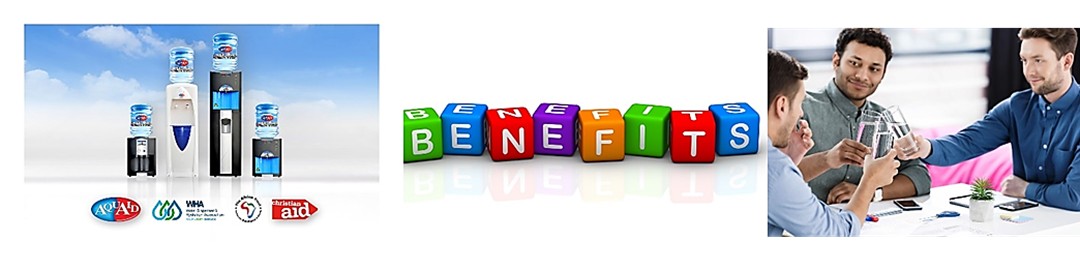
In a market where it often appears that like = like, it’s good to remind ourselves why a water cooler from AquAid is really the best idea. Choosing AquAid brings more than just a constant supply of refreshing drinking water to your premises – it delivers a range of valuable benefits that make a real difference.
Refreshment On Tap
With any AquAid water cooler installed, you and your team have access to fresh, chilled (and hot) drinking water throughout the working day – helping everyone stay hydrated, alert and productive.
Decades of Expertise
AquAid brings over 25 years’ experience in supplying top-quality water coolers and related products. That expertise means reliable service, knowledgeable support and equipment you can trust.
Local Service, National Reach
With 22+ branches across the UK, you’ll be supported by a local team who understands your area and your needs. This ensures prompt delivery, responsive service and a personal approach.
A Greener Approach
We’re committed to reducing our environmental impact. Local deliveries mean lower emissions and our bottles are reused up to 35 times before being responsibly recycled. Even our cups are made from a single plastic type for easier recycling – and we actively encourage our customers to recycle too.
Water for You, Water for Others
Every AquAid water cooler directly supports clean water projects in Africa. In partnership with Christian Aid and The Africa Trust, we’ve donated over £23 million so far, bringing safe, sustainable water to more than four million people.
Value-added Extras
- 100 free refillable bottles for schools with every mains-fed cooler installed
- Hydration awareness posters to support healthy drinking habits at work and in schools
Choosing AquAid means more than just staying refreshed – it’s hydration with heart, backed by service you can count on.

by Fern Shaw | Feb 27, 2025 | aquaid, water cooler, Water Coolers, water dispenser
We’re here to help. Yes, of course, we’re in the business of providing you with cool, chilled and hot drinking water at your premises, whether that’s at your office; warehouse; site; practice; university; college or school, however, we’re also concerned with ensuring that you drink enough water to keep yourself well hydrated throughout the day, which is why we’ve written this ‘Best Practices Guide’ for you:
Step One
Educate: Having everybody in the workspace on board is the most crucial component in a hydration plan. Educate yourself about the negative effects and downsides resulting from drinking too many fizzy drinks and caffeinated drinks instead of water. Use visual reminders – e.g., put up a poster illustrating good hydration techniques; these are a great way to continually reinforce to you the importance of drinking water.
The benefits of drinking sufficient water are manifold.
Step Two
Assessment: The best way to assess your hydration status, given the variables of body mass, work routines, and other personal and physical aspects, is to monitor urine colour. When you are drinking enough water, your body is in balance and your urine will be a pale straw yellow colour (Hydrated). When you haven’t drunk enough water, your kidneys try to save as much water as they can and causing your urine to be darker in colour (Dehydrated). Chat with your local AquAid branch about our dehydration charts, which clearly illustrate the difference between being hydrated to mildly and severely hydrated.
Step Three
Implementation: The most critical part of the best practices guide is to ensure that drinking water is readily accessible and is appealing to drink. Keeping a refillable water bottle or glass on your desk or in your workspace is a helpful reminder to keep drinking water while you’re at work. If you’re in a smaller workspace, perhaps you and your colleagues can request that the water cooler be placed in an area that you can either see from your desk or that you are sure to walk past more than once a day.
Conclusion: Encouraging hydration during the workday can have a significant impact on your own overall performance and well-being. This requires a commitment from you, so keep up to date on the positive effects of staying hydrated.
Contact us at AquAid today – we’d be delighted to assist you, advising which water cooler dispenser is best suited for you based on your requirements.

by Fern Shaw | Feb 10, 2025 | aquaid, Charity, Christian Aid, water cooler, Water Coolers
World Pulses Day
Since its inception in 2019, the 10th of February every year commemorates World Pulses Day. A few facts about pulses:
The Food and Agriculture Organization of the UN recognizes eleven different types of pulses: dry beans, dry broad beans, dry peas, chickpeas, cow peas, pigeon peas, lentils, Bambara beans, vetches, lupins and pulses nes (other minor types of pulses that don’t fit within the other categories).
Pulses are highly sustainable and climate-resilient crops. They require relatively low amounts of water compared to other protein sources and can grow on marginal land. They also help increase soil fertility by fixing nitrogen, making them a crucial element in crop rotation practices.*
World Pulses Day History
World Pulses Day serves as a global celebration of the nutritional and environmental benefits that pulses offer. Recognising the vital role these protein-rich legumes play in promoting sustainable agriculture and addressing important issues such as food security, nutrition and climate change, World Pulses Day has seen an outpouring of support from governments, farmers, researchers and consumers alike, working collaboratively to ensure pulses become a staple part of diets on a global scale.
World Pulses Day provides an opportunity for the international community to celebrate the importance of pulses in ensuring a sustainable and healthy future.*
Christian Aid
From Christian Aid, “For thousands of farming families in Malawi, pigeon peas are a route out of poverty. The mighty pigeon pea is drought-resistant, so it thrives in the dry fields of southern Malawi. It’s an essential part of the diet of millions of people around the world.
Together with our partners, we empower vulnerable communities to find practical and sustainable ways out of poverty, including giving them the skills to:
- Form cooperatives to improve their access to markets and secure a fairer price for their crops.
- Set up savings and loans to start their own businesses
- Boost the quality of their seeds and restore soil fertility
- Build warehouses to keep their crops safe from floods and cyclones, compete against large-scale producers, and gain new markets
- Promote pigeon pea recipes to increase consumption in Malawi and prevent hunger.”
AquAid
Thanks to the support of AquAid customers, together we have funded projects in Malawi that have helped over 3,300 pigeon pea farming households by reducing income poverty.
By choosing AquAid as your water cooler provider, you are helping people living in poverty globally to access clean water and build healthy lives. AquAid has supported Christian Aid for more than 15 years, donating over £4 million to water and capacity-building projects around the world.
*source: WinCalendar – World Pulses Day

by Fern Shaw | Jan 28, 2025 | aquaid, water cooler, Water Coolers
It was the International Day of Education recently. The day is aimed at advocating for quality education and equal access to education for all.
Numerous activities promoting the significance of and highlighting how important education is were held across the UK.
What may be surprising is that something as simple as drinking water can significantly impact a child’s education, as staying hydrated is crucial for cognitive function, focus, and overall well-being, all of which play a vital role in a child’s ability to learn.
How does hydration affect learning?
Improved concentration and focus. When children are dehydrated, their brains don’t function at their best. Dehydration can lead to fatigue, headaches, and difficulty concentrating, making it harder for them to pay attention in class and absorb information.
Enhanced memory and cognitive function. Studies have shown that proper hydration can improve memory, critical thinking skills, and overall cognitive function. This means that well-hydrated children are better equipped to tackle challenging subjects and retain information.
Reduced illness and absenteeism. Dehydration can weaken the immune system, making children more susceptible to illness. By staying hydrated, children are less likely to get sick, reducing the number of school days missed and ensuring they don’t fall behind in their studies.
Improved mood and behaviour. Dehydration can affect mood, leading to irritability and fatigue. When children are well-hydrated, they are more likely to be happy, alert, and engaged in their learning.
What can parents and educators do to encourage children to drink water?
Make water readily available. Ensure that children have access to clean water throughout the day, both at home and at school.
Set a good example. Children are more likely to drink water if they see their peers, parents, and teachers doing the same.
Encourage children to bring water bottles to school*. This allows them to stay hydrated throughout the day.
Making a conscious effort to ensure that children are well-hydrated is a simple method that can help create a more conducive learning environment and help them reach their full potential.
Installing an AquAid water cooler or water fountains in schools provides students and staff alike with direct access to a constant source of drinking water. All of which help create and instill better hydration habits.
AquAid also offer *free refillable drinking water bottles and free school posters to help keep water top of mind during the school day.