by Fern Shaw | Jul 31, 2017 | aquaid london south east
AquAid Water Coolers have been in operation providing high quality water coolers, dispensers and water boilers since 1998. Today, AquAid have 35 branches throughout the U.K.
In London, AquAid have not one, but two branches in the capital.
If you have any water or water cooler requirements in London’s South East, then you need look no further than AquAid London South East or AquAid LSE as the branch is known.
Owned and managed by the inimitable Paul Taylor, AquAid LSE has been supplying water coolers, dispensers and bespoke water supply solutions to their customers for 16 years. Paul and his team look after more than 1,250 customers at worksites, care facilities, hospitals, offices, universities, colleges and schools.
Although London’s South East boroughs of have changed somewhat over the years, AquAid LSE continues to look after their customer requirements throughout the following areas:
Beckenham, Bexley, Camberwell, Docklands, Erith, Forest Gate, Greenwich, Lambeth, Lewisham, Orpington, Peckham, Rotherhithe, Sidcup, Southwark, Stratford, Swanley, Walthamstow and Welling.
Certainly a mouthful but AquAid LSE has you coolered nonetheless!
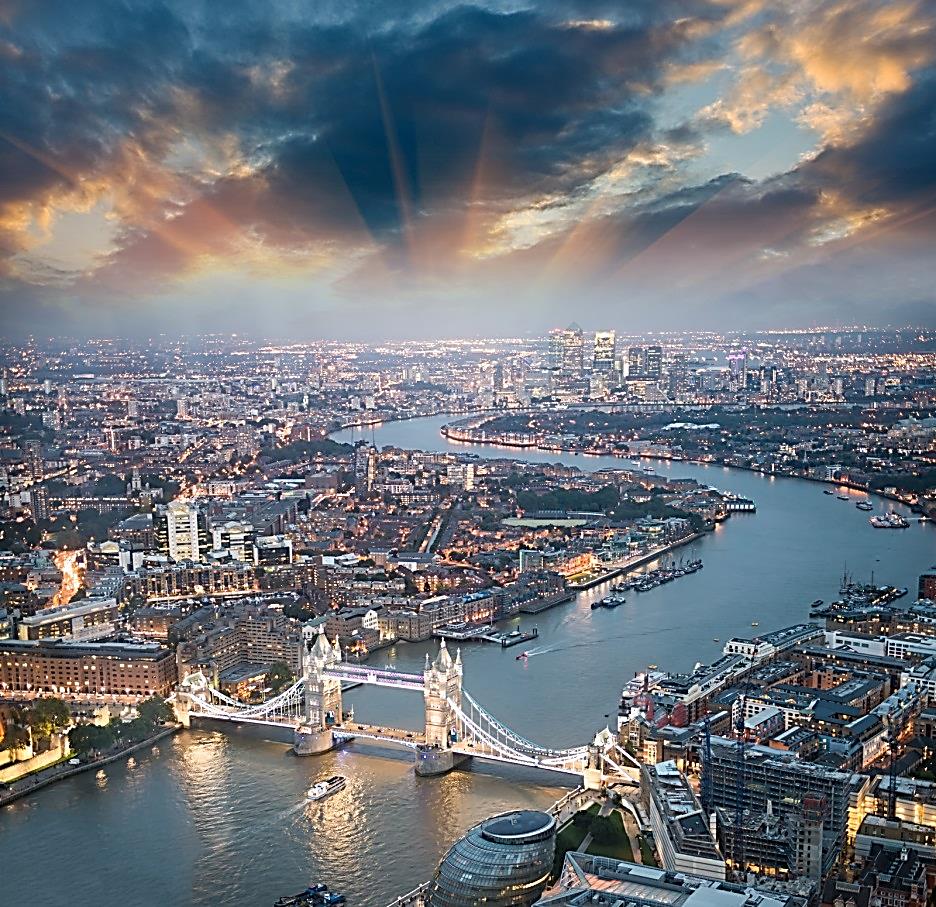
Some perhaps lesser known points of interest in and about the boroughs of London’s South East:
*The O2 Arena in Greenwich, originally known as the Millennium Dome, is so large that it can fit the Great Pyramid of Giza or the Statue of Liberty inside. It is the largest structure of its kind in the world, but with a seating capacity of 20,000, it comes in second to the Manchester Arena.
*The London Docklands: In 1696, the Howland Great Dock was formed in Rotherhithe. It was established to give more area for the ships to dock and secure the ship from any thieves. There are at least 120 large vessels which could be accommodated in the dock.
*Lambeth Bridge is painted red in honour of the House of Lords, while Westminster Bridge is painted green for the House of Commons. It is an interesting honour considering that Parliament attempted to block the building of the bridge in 1664, 1828, and 1836, as well as trying to block its widening in 1912.
So whether you’re situated in the Docklands, Greenwich or Lambeth (or in any of the other 15 locales) in London’s South East, AquAid LSE is available for all your water and water cooler requirements. They may not be painting any bridges red or green but they’ll always be able to offer you cool blue drinking water, whatever your set-up requires.
Contact them today – they’ll be more than pleased to assist.
*source: from an article in Londontopia
by Fern Shaw | May 5, 2017 | aquaid london, Uncategorized, water cooler
Yes, there was a
Part I – catch up already. Just in time for the weekend or to amaze your mates and/or colleagues as you gather around the
water cooler next week, we present Part II:
* London is one of only two cities above the 50th parallel with a population of more than five million. Moscow is the other.
It is thought that St. Patrick may have brought the early knowledge of whisky distilling from Ireland around the mid-5th century. The Scots call it uisque baugh in Gaelic, or ‘water of life’, and it is one of the United Kingdom’s top five exports, along with cars, computers, aircraft, and oil. Personally, I couldn’t think of a nicer export, could you?
In the 16th century, Britain’s Queen Elizabeth I decreed that mutton could be served only with bitter herbs, intending to stop people from eating the sheep in order to help the wool trade. Her subjects discovered mint sauce improved the taste of the meat, and it’s been a favourite condiment for roast lamb ever since. Hmm, clearly I’m in the minority as I’m not a fan of the whole mint sauce accompanying roast lamb thing.
Until 1832, England only had two universities: Oxford and Cambridge.
The sport of football, or soccer, supposedly got its start in England when Anglo-Saxon farmworkers plowing a field unearthed the skull of a Danish warrior killed in battle a few years earlier. To show their still bitter feelings towards the Danes and to amuse themselves, they began kicking the skull among them. This early form of football was called “kicking the Dane’s head”. Seems the savagery has passed from the players to the supporters somewhat!
James Bond’s code ‘007’ was inspired by the author Ian Fleming’s bus route from Canterbury to London. Am I the only person who when thinking of James Bond – immediately starts singing, ‘Goldfingggggerrrrr’ as opposed to any of the other James Bond theme songs?
The Ghost Research Foundation has determined that with 500 recorded cases of ghostly encounters, York is the most haunted city in England and one of the most haunted in the world. Make appropriate ghostly type noises here.
Well, that’s the lot for this week’s content of trivia to amaze and astound. Keep an eye out for future inserts and as always, please feel free to add to and / or correct the trivia if you feel I have it all wrong.
*from various sources from an article at Fact Retriever
by Fern Shaw | Apr 12, 2017 | water cooler
You’ll note that I wrote ‘interesting’ and while you may be openly scoffing at the use of this adjective, I pinkie swear that these facts are not only interesting but are also perhaps lesser known facts about your drinking water.
- The weight a person loses directly after intense physical activity is weight from water, not fat.
- Water dissolves more substances than any other liquid. Wherever it travels, water carries chemicals, minerals and nutrients with it.
- One of the lesser known benefits of drinking water is that it helps keep your joints strong, healthy and lubricated. Your joints need moisture in order to remain strong and flexible, so that your movements are smooth and pain free.
- Drinking too much water too quickly can lead to water intoxication. Water intoxication occurs when water dilutes the sodium level in the bloodstream and causes an imbalance of water in the brain.
- Water intoxication is most likely to occur during periods of intense athletic performance.
- At birth, water accounts for approximately 80 percent of an infant’s body weight.
- Drinking water makes your muscles stronger. That’s because water carries oxygen to the cells of your body, including those of your muscles. Drinking plenty of water enables your muscles to work harder and longer before they feel tired, and this can help you build muscle.
- Water is sticky. The molecules love to stick to things, especially each other. It’s what gives it such a large surface tension. It keeps you alive: it means water can pull blood up narrow vessels in the body, often against the force of gravity.
There are quite a few facts in here that I was vaguely aware of, however, I certainly didn’t know that water is sticky! I think No. 8 now stands out for me forevermore – I love the fact that water is able to pull blood around our bodies – fascinating!
Want to get on the right track to fitness and health? Know you’re not drinking enough water every day? Speak to us at AquAid – we’d be pleased to help with all your water cooler dispenser requirements – keeping you water fit and hydrated rain or shine.
by Fern Shaw | Mar 29, 2017 | water cooler, Water Coolers
Generally, everyone enjoys a good bit of trivia and none so more than me.
People have pretty fertile imaginations though, so the facts behind some trivia can easily be distorted and the internet being as it is, fact checking trivia snippets can be a little difficult.
To astound and amaze, here’s a bit of trivia to keep you amused this week – and to keep your brain active during your working day. Try them out on colleagues at the water cooler when you beetle off to replenish your water bottle (just no Larry [or Larissa] the Lounge Lizard actions while you’re there now, see?)
John Cleese’s father’s surname was Cheese. Cleese grew up 10 miles from Cheddar and his best friend at school was called Barney Butter.
The last private resident of No 10 Downing Street was called Mr Chicken. Nobody knows anything about him other than his name. He moved out in 1732, after which King George II presented both houses to Sir Robert Walpole.
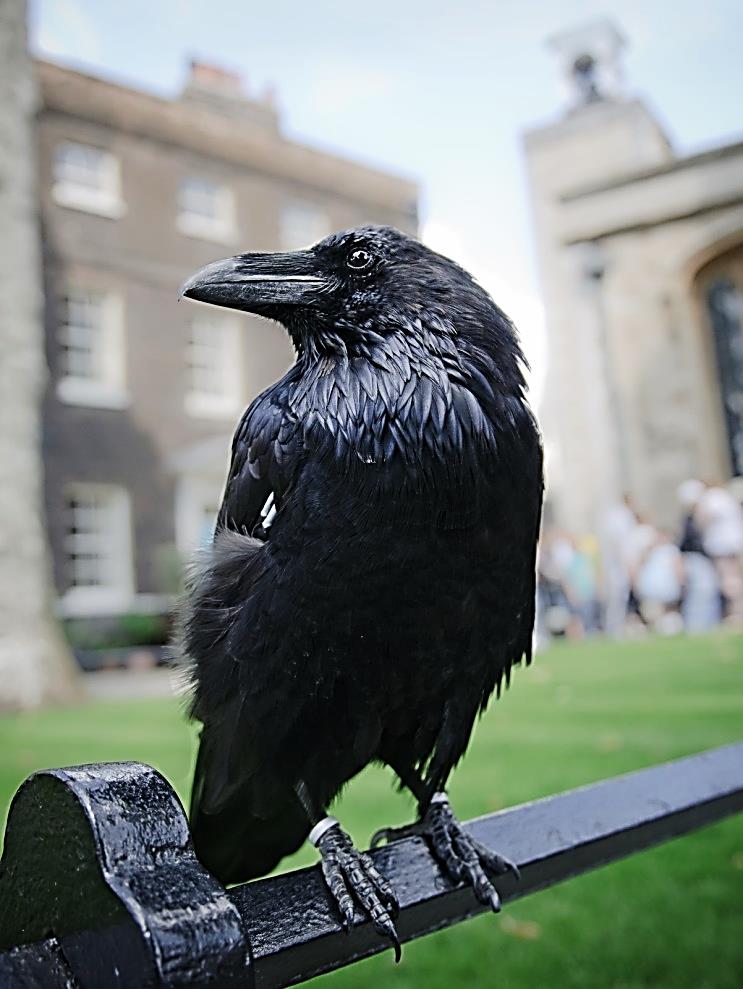
All but one of the ravens at the Tower of London died from stress during the Blitz.
In 2009, a retired policeman called Geraint Woolford was admitted to Abergale Hospital in north Wales and ended up next to another retired policeman called Geraint Woolford. The men weren’t related, had never met and were the only two people in the UK called Geraint Woolford. Imagine that conversation around the ward’s water cooler!
A blue whale can hold up to 5,000kgs of water in its mouth. (No, we’re not able to provide blue whale water coolers even if you are a large organisation).
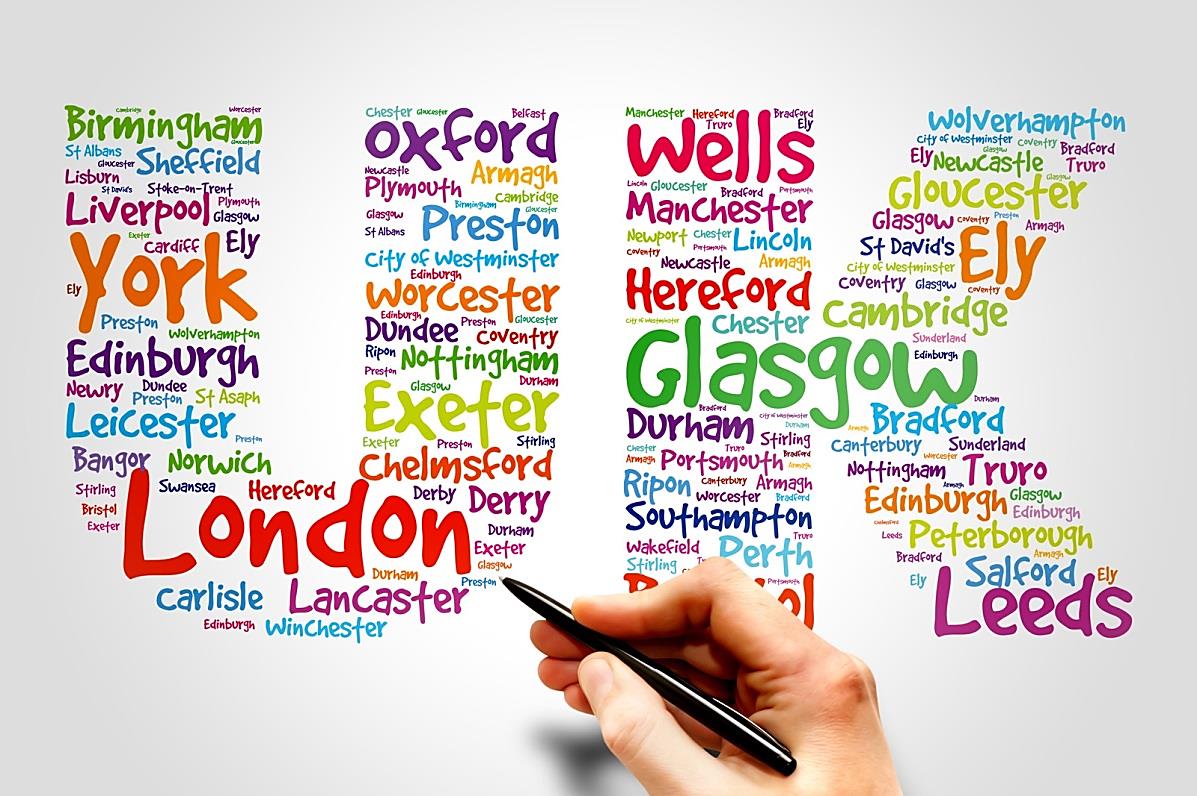
In the UK, accents change noticeably about every 25 miles.
British Pennies, pre-1971, are used in the pendulum to adjust the time in London’s Big Ben clock tower.
The names of the English rivers Avon, Axe, Esk, Exe and Ouse all mean ‘river’ or ‘water’ in various ancient languages.
Now you know. In fairness, a blue whale isn’t really British, however according to the ‘Fishes Royal’ which states that all sturgeon, whales, porpoises and dolphins in the water around the UK belong to the Queen, apparently they are!
I’ve fact checked these as best I can – if you know differently – please feel free to correct me and provide your source.
by Fern Shaw | Mar 9, 2017 | Water, water cooler
If there’s one thing I love, its words. Long words; clever words; descriptive words; short words; double-entendres – they all make me smile.
What I love in particular though are euphemisms, or adjectives that have formed through colloquial speech and are either endemic to a particular region or country or have been picked up and adapted in different countries.
Depending on where you hail from, you probably use these expressions all the time, but perhaps you don’t know where they originate from. Here’s a choice few for your enjoyment. I for one, certainly didn’t know the origin of:
Doolally
What it means: Temporarily deranged or feeble-minded.
Example: ‘Uncle’s gone doolally again’.
Another meaning: Transported with excitement or pleasure.
Example: ‘I saw a pair of shoes that I know Doris would go doolally over’
Origin: Early 20th century: originally doolally tap, Indian army slang, from Deolali (the name of a town with a military sanatorium and a transit camp) + Urdu tap ‘fever’.
Argy-bargy
What it means: Noisy quarrelling or wrangling.
Example: ‘It’s all part of the argy bargy, he says, of the debate that has dominated politics over the past few months or so’.
Origin: Late 19th century (originally Scots): rhyming jingle based on argue.
Barmy
What it means: Eccentric or foolish.
Example: ‘If you ask me, that bloke going on about using sunflower oil as a petrol sounds right barmy’.
Origin: an obscure term derived from ‘barm’, that is, ‘the froth that forms on the top of fermenting malt liquors,” which had been metaphorically, but sparingly, used to mean ‘flighty’ or ‘excited’.
Gee-gees
What it means: Horses. Usually children and gambler’s use.
Example: ‘I’m off to place a bet on the gee-gees’.
Origin: Possibly from the founding father of Chester Races, Henry Gee, whose name led to the use of the term ‘gee-gee’ for horses. Also, ‘gee’ or ‘gee up’ is also a command to get a horse to move faster. It’s also apparently used to have a draft animal turn right. As opposed to haw, which is a command to turn to the left.
There’s also a rather hysterical (imo) joke that goes:
How do you spell ‘Hungry Horse’ in four letters?
M T G G (Empty Gee-Gee).
Who knew? Well, now you do. Why not try them out on a colleague on your next trip to the water cooler when you’re replenishing your water. If nothing else, it’s sure to raise a laugh, especially if you’re having a big day at the office.