by Fern Shaw | Mar 4, 2016 | Water, water cooler
Does Drinking Water make you Smarter?
Quite simply, yes, it does. How so, you ask (with a healthy lean towards scepticism)? Well, it’s like this:
Every single organ in our bodies relies on being hydrated (i.e. water) to function; this includes the brain.
While you may not realize it, dehydration causes more than just thirst. Water plays an important role in the function of our cells, tissues and organs. Water transports oxygen to the brain, which allows it to communicate important messages to the rest of the body. Even the slightest lack of hydration can reduce your concentration and impair your ability to think clearly and perform well.
Water plumps up our cells, every single last little man jack of them. Think of the benefit of water in terms of when you have dry skin. It becomes shrivelled and crêpe-like the more dehydrated you are. Look at what happens when you rehydrate – your skin becomes noticeably more plumped up, smoothed out and more elastic.
Now picture this example in terms of at a microscopic level – imagine your brain cells lying all flat and sad looking, like a person in a desert, dragging themselves along, trying to function with their body’s resources depleted. They then see an oasis and manage to drink from it. Skip forward in time and that same sad looking, flattened out individual has been transformed into a fully functioning, walking, talking and much happier person all round. The same goes for your cells.
Ergo, our brains depend on proper hydration to function optimally. Brain cells require a delicate balance between water and various elements to operate, and when you lose too much water, that balance is disrupted. Your brain cells lose efficiency.
Years of research have found that when we’re parched, we have more difficulty keeping our attention focused. Dehydration can impair short-term memory function and the recall of long-term memory. The ability to perform mental arithmetic, like calculating whether or not you’ll be late for work if you hit snooze for another 15 minutes, is compromised when your fluids are low.
Over the course of a typical twenty-four hour period, the longest spell most of us go without fluid intake is the six to eight hours we spend sleeping. Sleeping is hardly the kind of activity that you sweat over, but that doesn’t mean you’re not losing water during the night. With every somnolent breath, you expel moisture, and the cumulative effect of a night’s sleep is to dry out.
This may sound like a tome of doom and gloom, but really, if you think about it, it really isn’t. In general, our nearest water source is a small reach or just a few steps away and that’s such good news.
If you want to test the theory, dearie, (I’m not suggesting that you purposefully dehydrate yourself), as you may already know that you probably aren’t drinking enough water daily, or you’re feeling sluggish or don’t have much get-up-and-go; why not try up your water intake? Take your own water bottle to work, replenish from your water cooler often, drink water when you arrive home. You’ll be amazed by the differences and it won’t take too long either if you stick with the ‘hydrate me, myself, I’ campaign.
Before long the only thing that’ll be flattened is that pile of work at your desk and all your paperwork at home. Cheers.
by Fern Shaw | Feb 29, 2016 | water cooler
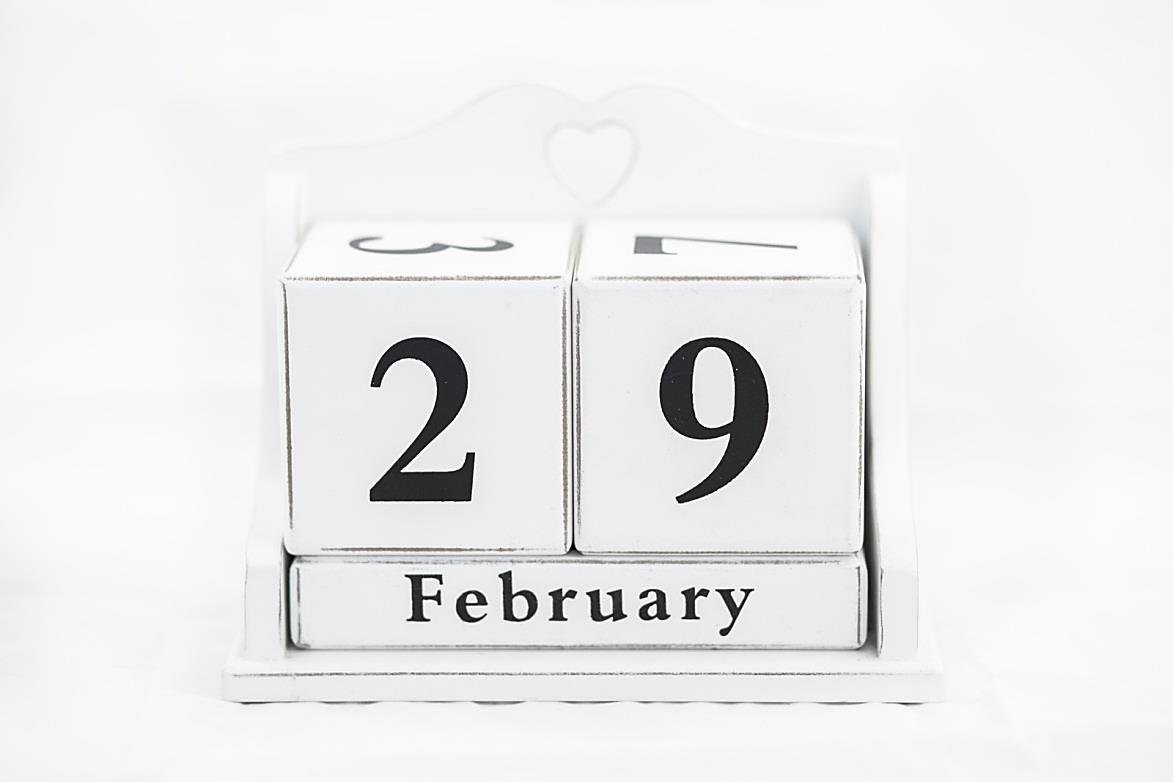
What is Leap Year exactly?
Simply put, it’s basically a catch-up day once every four years due to the disparity between the solar system and the Gregorian calendar.
A complete orbit of the earth around the sun takes exactly 365.2422 days to complete, but the Gregorian calendar uses 365 days.
So leap seconds – and leap years – are added as means of keeping our clocks (and calendars) in sync with the Earth and its seasons. Well, who knew! (Now you do).
Never mind all the factual stuff, what does it mean to me and others born on the 29th of February?
Well, the chances of having a leap birthday are one in 1,461. So, you and your kind (oft referred to as ‘leaplings’ or ‘leapers’) number about 4.1 million people around the world. In non-leap years, many leaplings choose to celebrate their birthday on either February 28 or March 1, while purists stick to February 29 for the occasion.
I’m a single grown adult male humanoid – should I be afraid today?
Perhaps. If you’re wondering why you might be afraid, it’s because the 29th of February means that traditionally this was a day that the popping the question falls to the women.
There are a number of theories about where this tradition originated, one being that in the 5th Century’, an Irish nun, St Bridget apparently complained to St Patrick that women had to wait too long for their suitors to propose. St Patrick then supposedly gave women the chance to ask the question every four years.
In Scotland, an unmarried Queen Margaret allegedly enacted a law in 1288 allowing women to propose on leap-year day. But there was a catch: The proposer had to wear a red petticoat (a skirt under her skirt) to warn her intended that she planned to pop the question.
In Denmark, if a man turns down a proposal they must give the woman 12 pairs of gloves and in Finland the penalty is fabric for a skirt.
Personally I think I’d be rather flattered if someone popped the question to me on this rather rare day. If you don’t find the idea flattering, then can I suggest that you avoid the water cooler area today – especially if you see any women lurking about wearing a red petticoat.
by Fern Shaw | Feb 24, 2016 | water cooler
Two summers ago, I blogged about keeping yourself tuned and fit while at work. Now, apparently it’ll be spring in a few weeks but for the moment it looks like we’re really still in the grip of winter. Despite this rather chilly weather, now is a good a time as any to get on the ol’ treadmill (so to speak) and intersperse your slothfulness in the office with some get routines that’ll have you fit and ready for when you’ve shed your winter gear (and hibernation habits).
Here are a few to try out:
The Office Genie: Want to add a little magic to the workday? Raise the legs into a criss-cross applesauce position while seated in a chair. With your hands on the armrests, push upwards to raise the body off the seat and remain floating for 10-20 seconds. Release back down to the chair, rest for a minute, and repeat. Caution – test the strength of chair arms with your legs unfolded first – you don’t want to be pretzled into a position and then your chair collapses.
The Shoulder Shrug: Not recommended for board meetings (unless you’re really on the fence). Simply raise both shoulders up toward the ears, hold for 5 seconds, and then relax. Repeat for 15 reps.
The ‘Wheeee’+ Desk Chair Wheel: Go ahead, play with your wheelie chair (everyone wants to!). While seated in a chair with wheels, position yourself at arm’s length from a desk or table and grasp its edge with your hands. Next, engage the core*, raise the feet slightly off the ground, and pull with your arms until the chair slowly rolls forward and your chest touches the desk’s edge. Then roll back by pushing away, with the feet still raised. Repeat 20 times, or until you burn holes into the carpet. *engage the core essentially means shoulders down and back; spine straight and lock your stomach and pelvic muscles.
The Stair Master: Want to avoid lift small talk in favour of elevating the heart rate? Take the stairs! Accelerate on the straight-aways and take two at a time every other flight for a real leg burn.
The Last (Wo)Man Standing: Sure, standing around isn’t exactly traditional exercise, but research shows it’s got more than a leg up on sitting. After all, long periods of sitting are linked to increased risk for diabetes, obesity, and cardiovascular disease, whereas standing significantly increases your daily caloric expenditure. Stand whenever you can, and consider roping in other colleagues to have standing meetings too.
Last (wo)man standing can, of course, be easily held when you head off to the water cooler to replenish your water (that you will really need to be drinking more than usual if you’re going to be starting up with these wonderful get fit ideas).
I’ll see you on the common beginning spring with your shorts on at this rate!
by Fern Shaw | Nov 9, 2015 | water cooler
Funny story. I social media-ed a friend the other day to ask him his opinion on a newish restaurant in our area – the type of jeuj (my word) restaurant that one usually only finds in town or city centres. He replied that the food was really good, but his one question was in the form of a hashtag #wewantplates, as apparently most of their courses were served on stone type boards reminiscent of the ‘80’s steak house grub that used to come on sizzling hot rocks and invariably take your eye out with the fat splatters* (more about this later).
Then this week, while having a gander at what’s trending in the U.K., I chanced upon a hilarious and rather troubling Twitter campaign titled – you guessed it – @wewantplates.
**The account was set up by Ross McGinnes, a journalist from West Yorkshire after a friend posted a photo of a steak on a slate online.
In just a week, the campaign has already attracted some 5,000 followers with his series of witty ripostes to restaurants who have dared to inject a large portion of gimmick into their presentation of meals.
Examples of novelty food presentation ranged from high tea set out on mini gardening benches through to bread in a hat. Yes, really, bread served in a flat cap. Hopefully, the cap hadn’t been worn before.
Other novelties include deconstructed tea served with milk in test tubes; Brie balls served in Camper shoes; bread served in slippers (not kidding) in Switzerland and butter slivers served on a broken bathroom tile.
Aside from the sizzling hot rock fiasco, I think the most adventurous I’ve ever ventured is to eat lunch (nothing too soggy, mind) off a wooden breadboard at my German mate’s house – and I survived, so all good. I believe I’d draw the line with any of the above presentation styles though, but without doubt, the one novelty serving style that would mean my bottom not even touching the chair would be an Italian restaurant where diners are invited to tuck into a sharing portion of spaghetti and sauce on a bare surface. Mamma mia, no! Just, no!
*In the spirit – aha – of complete transparency to do with ‘hot rock’ cooking, I went one step further in trying to remove my face at one of these occasions by splashing loads of spirit vinegar over my chips while my steak was still ‘cooking’ and almost succeeded in flambéing not only myself but my dinner companion. This is just another reason why people start up campaigns like @wewantplates – the ‘safety to the diner’ factor.
When all is said and done though, isn’t it nice to know that at least you know when you swagger on up to your water cooler, you’re pretty much guaranteed of being reliably served up a cool draught of spring water or a mug of piping hot water, depending (of course) on which product you have on your premises. No bare bones, gardening shed, flat cap serving going on here, dear!
**extracts from an article at the Mail Online
by Fern Shaw | Oct 19, 2015 | water cooler
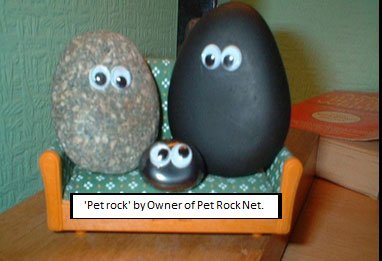
I was trolling the net, looking at what’s trending this week in the U.K. when it occurred to me – whatever happened to all of those ‘Pet Rocks’. No, I don’t mean your pet rocking out on some YouTube clip, I’m referring to the 1970 something craze of having your own Pet Rock to take care of.
In case you don’t have a clue as to what I’m referring to, here’s some more info, ‘In April 1975, Gary Dahl (founder of the pet rock) was in a bar listening to his friends complain about their pets. This gave him the idea for the perfect ‘pet’: a rock. A rock would not need to be fed, walked, bathed, or groomed; and would not die, become sick, or be disobedient. He said they were to be the perfect pets, and joked about it with his friends. Dahl took the idea seriously, and drafted an ‘instruction manual’ for a pet rock. It was full of puns, gags and plays on words that referred to the rock as an actual pet’ – Wiki
Now you know. If you missed this trend or craze, for whatever reason, bet you’re pleased round about now! But what about other crazes or trends in the last few decades that we look back at and can apply the oft used expression, ‘I’m so glad there wasn’t any social media when I was growing up’? Here are a few examples that may have you groaning into your water bottle:
Tamagotchi’s; Mr Motivator; Sega Mega Drives and Tetris.
Yo-yos; jelly aliens in plastic eggs; Pokémon cards and glow-in-the-dark jewellery.
Banana and butterfly hair clips.
Big hair; leggings and, of course, the ubiquitous Shell Suit. In case you were wondering what a shell suit was, this was big, fashion wise, in the eighties. The shell suit was a pretty bizarre fashion statement, jumping on the leisure wear trend à la Flashdance. It was a trend that allowed people who blatantly never did any form of exercise to look like they did, and it came in the form of nylon waterproof trousers and a matching jacket. It was during this time that fluorescent materials were at the very peak of their popularity. This meant that all manner of different garish colours and fluorescent strips were thrown together and it really didn’t matter if it clashed or not – in fact, if it did clash that was all the better.
While I was writing this and chuckling meanly to myself about how awful some of the trends i.e. the shell suit, were back then, and congratulating myself about how we truly have come a long way, baby, a thought occurred to me. In a word – the Onesie.
‘nuff said. Trolling trend water cooler critiquer out.