by Fern Shaw | Aug 24, 2020 | Water Coolers, water dispenser
AquAid is the UK’s leading water cooler supplier. Dedicated to providing exceptional service, we supply a wide range of high-quality water coolers, water boilers and refreshing drinking water. Our water coolers, designed to match your requirements, are suitable for installation in any size of organisation in the Business, Hospitality or Educational sectors.
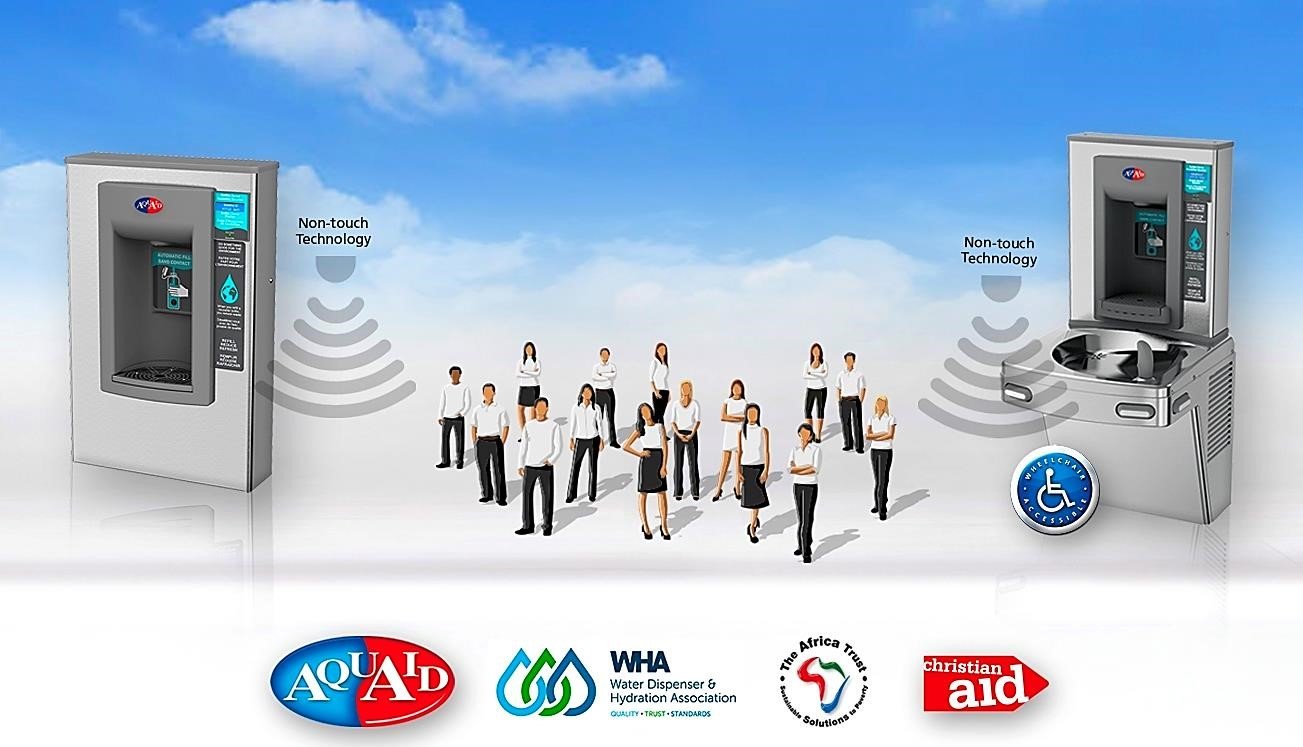
For some time now, we have seen an increased demand for contactless Water Coolers, which is why we are pleased to introduce the latest in our range of Mains-Fed Water Dispensers:
The AquAid Non-Touch Water Cooler
Each of these well-designed, innovative machines offer a host of operational safety conscfious features, all while dispensing a high volume of chilled or cool refreshing drinking water on demand.
These AquAid Non-Touch water dispensers offer a host of features including a non-contact dispense point; large bottle clearance height; ‘Freshield’ anti-microbial components and electricity free function.
Thanks to their durable design, low maintenance and running costs, these Mains-Fed Water dispensers are perfect for installation in any sector where there is a high demand for drinking water.
For your convenience as an AquAid customer, the resources of our National Benefits are at your disposal.
You also benefit from AquAid’s two decades of expertise in other aspects. Installing our water coolers means you are helping far-flung communities in need realise a better and safer water future. All at no added cost to your organisation.
We invite you to browse our range of non-touch water dispensers or to contact us directly for expert advice.

by Fern Shaw | Aug 17, 2020 | bottle fed water coolers, mains fed water cooler, water cooler, Water Coolers
We understand that you wish the best for everyone who works in your office – and that their health and well-being is vital for their being able to perform at their very best while they are at work.
That said, we also understand that the focus of your day-to-day business operations most likely isn’t directed towards what the best, most cost-effective and convenient solutions are to ensure that your staff have easy access to a constant supply of refreshing chilled drinking water.
The good news is that there is a simple solution. Speak to us at AquAid . For more than 22 years, we have been supplying office water coolers and bottled water from source to more than 33,000 customers across the UK.
What’s more, we offer nationwide coverage with our 23 branches across England, Scotland and Northern Ireland; all committed to meeting AquAid’s exacting customer service standards.
Unsure of what water cooler you need for your office?
We offer a free on-site survey to assess what your needs are and which of our range of high-quality office water coolers, be they bottled, mainsfed water coolers or water boilers best suit your requirements.
AquAid are a large organisation – are we able to provide a personal touch?
With AquAid, you gain the efficiency and resources of a national company coupled with the personal, hands-on service of a local provider. In addition, because we understand that each customer’s needs are different, we tailor each contract to meet your specific requirements.
Added benefits at no cost
Aside from providing office water coolers, installed by one of our qualified engineers, as well as a three or six month service carried out by our WHA accredited service technicians, partnering with AquAid results in you also helping to bring opportunity and hope to thousands of people every day.
Each installation of an AquAid Mainsfed water cooler and each bottle of water purchased carry an automatic donation to the charities that AquAid have supported since our inception in 1998.
For all your office water cooler requirements, contact AquAid: Website: www.aquaidwatercoolers.co.uk E-mail marie@aquaidwatercoolers.co.uk: Phone: 0800 772 3003

by Fern Shaw | Jun 24, 2020 | bottle fed water coolers, water cooler, Water Coolers, water dispenser
It is no surprise that teaching our children to drink water more may appear a task easier said than done. However, as many adults, parents and teachers know, there is a secret weapon in our arsenal. It stems from a well-known phrase: lead by example. It may seem rather tired and a bit worn out nevertheless, it is true and it is effective.
How?
Children often emulate adult behaviour, especially those adults with whom they have daily interaction. If you as the carer of a child are seen to drink water regularly, it is more probable that a child will be better encouraged to do the same, instead of merely telling the child to drink water without any example shown.
Why?
The results from a great deal of research, including a recent study at the University of East London , show that children are better able to concentrate, retain information, take part in activities and are able to better function overall the more hydrated they are.
Method?
Uninterrupted access to refreshing spring and filtered water – maintained at a pleasing ambient or chilled temperature – all at the press of a button. With more than 22 branches nationwide, this is easily achieved by installing a water cooler from AquAid.
Benefits?
Healthier and happier children of course. With AquAid, there are added benefits and these are at no additional cost to your school, academy, college or university.
For each Mainsfed Water Dispenser we install, a portion of that revenue is donated to charities. Charities such as Christian Aid the AquAid founded Africa Trust. These donations are utilised to implement clean water resources where they are needed most, like in schools and villages, in countries throughout Africa. At AquAid, we understand that helping others is key component to a healthy and strong organisation as is attested by our collective 30 years of supporting these charities.
If you would like to know more about installing a high-quality Mainsfed or Bottlefed Water Dispenser or Indoor Water Fountain, contact us.
by Fern Shaw | Jun 4, 2020 | bottle fed water coolers, water cooler, Water Coolers
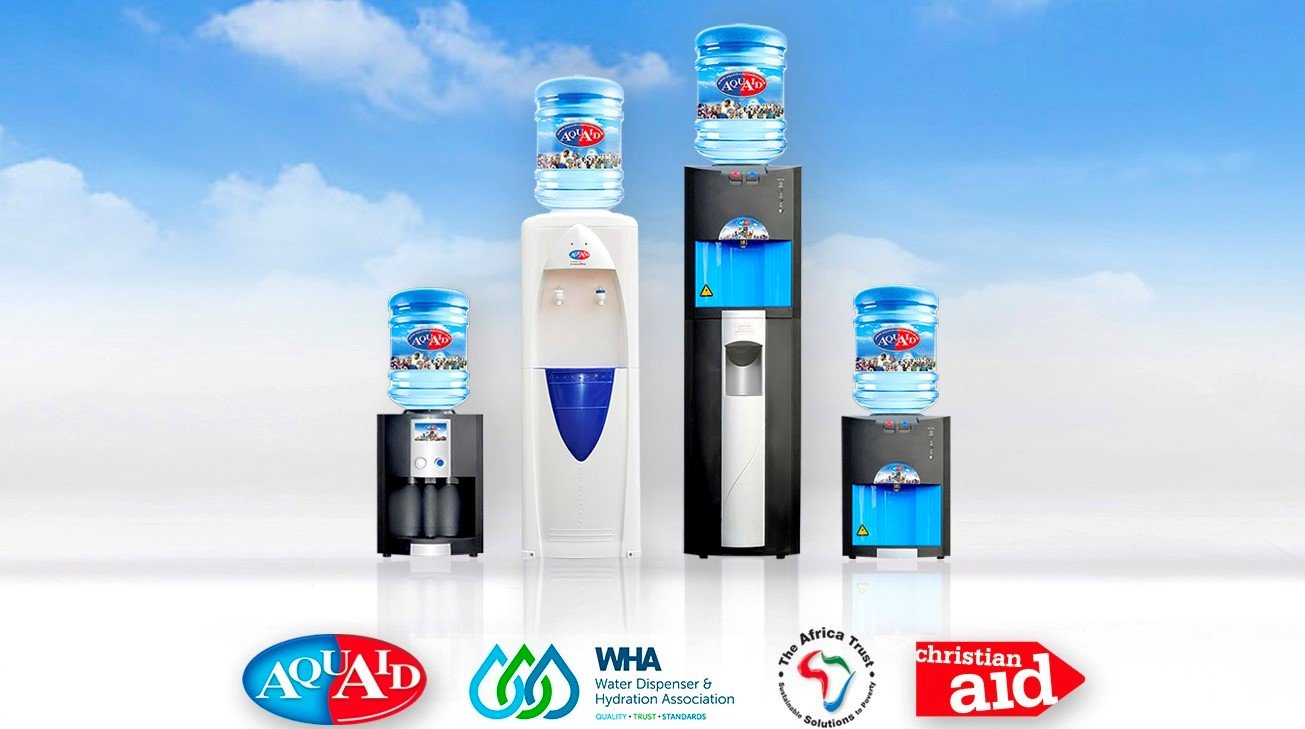
As with all our bottled water products, AquAid provides Bottled Water Coolers and water filtration that ensure you are drinking only the finest fresh water available, drawn from three sources around the United Kingdom.
Our bottled water is pure and filtered to remove any harmful chemicals and bacteria, leaving you feeling healthier and refreshed. Many water-processing plants use dangerous chemicals to purify their water, but AquAid do not. Our water is as clean as nature intended it to be.
Bottled Water Coolers are the perfect solution where portable water or a mains water supply is unavailable.
A Bottle-Fed Water Cooler is ideal for placement in any workplace and for any size of staff contingent. These free-standing coolers are easy to move to a new location within the organisation should this be required.
Another benefit of having a Bottle-Fed water cooler is easy access to a source of proper hydration at all times. Tests have shown that a drop in body fluids can lead to poor mental and physical performance of up to 30%. Having access to fresh water and being able to replenish your water throughout the day will ensure that you are never thirsty, and that you are always able to perform at your best.
There is a reduced environmental impact. Our water bottles are collected, thoroughly cleaned, sanitised and re-used multiple times. Once spent, they are granulated and re-cycled in an ecologically friendly manner.
As we have branches throughout the United Kingdom, our bottled water delivery is quick and efficient. We also offer an urgent water replenishment service.
Installing a Bottled Water Dispenser from AquAid not only means a healthier and hydrated you, but also the opportunity of the delivery of life-changing safe water for those in need. For each bottle of water supplied, a donation is made to the charities that AquAid have supported for more than 20 years. These donations are at no additional cost to our customers.
No matter what sort of water cooler you are looking for, at AquAid we have the perfect solution for you. Have a look at our easy-to-navigate website for the full range of water coolers that we offer for your convenience and continued health and hydration.

by Fern Shaw | May 29, 2020 | Water Coolers
At present, it’s understandable that we may crave comfort food and drinks. The quick fix from salt and sugar loaded food and drink is undeniable, so even while you’re attempting to stay better hydrated, you may be ingesting dehydrating substances without even realising it.
Sodium is a big culprit
When you eat salty foods, your cells tell your brain that you’re thirsty. Examples of foods high in salt are fast foods, potato crisps, tinned foods, deli meats and condiments like tomato ketchup, brown sauce and sweet chilli sauce.
Sugary drinks also contribute
Much like salty foods, sugary drinks also tell your brain that you’re thirsty. Try to avoid these – fizzy, energy and sports drinks as well as over sugared coffees and cocktails.
Instead of eating and drinking these dehydration-inducing foods and beverages, drink more water and add these top superfoods to your diet for optimal health and antioxidant levels.
Blueberries
Yielding antioxidants, vitamin C and anti-inflammatory properties, a handful of these berries daily can do wonders.
Fatty fish
Fatty fish with omega-3s include salmon, herring, sardines, and mackerel. Make sure that you only buy fish off the endangered list. A good guide to which are sustainable and safe fish to buy can be found here.
Soy
This does not mean using enough soy sauce to turn your sushi rice another colour. Soy sauce has a high sodium content. Clean and simple soy is recommended. Soy in this category includes tofu, soymilk and edamame. For the curious, edamame are green soybeans boiled or steamed in their pods.
Fibre
There are a variety of great options for getting more fibre in your body:
- Beans. Think three-bean salad, bean burritos, chilli, and soup.
- Whole grains. That means whole-wheat bread, pasta.
- Brown rice. White rice doesn’t offer much fibre.
- Popcorn. It’s a great source of fibre.
- Nuts. Almonds, pecans, and walnuts have more fibre than other nuts.
- Baked potato with skin. The skin’s important here.
- Berries. All those seeds, plus the skin, give great fibre to any berry.
- Bran cereal. Actually, any cereal that has 5 grams of fibre or more in a serving counts as high fibre.
- Oatmeal. Whether its microwaved or stove-cooked, oatmeal is good fibre.
- Vegetables. The crunchier, the better.
With all this talk about salt, it’s quite likely you’re now thirsty, so to help, here are a few thirst-quenching alternatives that are not only good for you, but will tamp down on your dehydration quickly:
Tea
The antioxidant powers of tea are present in both black and green tea. Moreover, you’re drinking water when you drink tea, minus all the sugar you would be when consuming fizzy drinks.
Calcium-rich
The health-conscious tend to stay away from dairy products for fear that they contain fat, but calcium is necessary for the body. If you’d rather not consume cheese and milk, take a calcium supplement.
Water
As always, the simplest and quickest route to maintain good hydration is to drink water more. To gauge how much water you should drink, refer to AquAid’s handy guide to start you off.
*updated from a blog post Jan 2013

by Fern Shaw | May 19, 2020 | Water, Water Coolers
During these rather unprecedented (for many) circumstances, it’s natural that we tend to focus on what we aren’t able to do: can’t this, can’t that and the list goes on.
As the saying goes, when all else fails, opt for simple (okay, there’s no such saying, but adapt we must). Here at AquAid Water Coolers, we took the image seriously and came up with a few options that for the most part, cost nothing but offer much reward:
Soak up the sun. Disclaimer: although this blogger cannot predict the weather, news suggests that this week we may expect temperatures as high as 26°C. (not so much in the North though … sorry about that!)
Revisit your favourite TV shows. From Rick Mayall through to Ricky Gervais, there’s nothing more therapeutic than a good ol’ belly laugh.
Build that model craft. Or planet (Lego Deathstar of course) or car, or dinosaur.
Plant something. Then tend to it, water it and watch it grow.
Have a conversation that isn’t a Zoom meeting. Call your furthest and dearest and have a good ol’ catch up.
Discover a new route. Try a different route while taking your outdoor exercise.
Increase your water intake. For real. Now, even more so, it doesn’t matter that you may need to pop to the loo so many times.
Relish the moment. Enjoy the time afforded: whether it’s wearing comfy, fluffy socks; brewing the best cuppa ever; cheat sleeping in for an extra half hour / hour or even longer (you little rebel, you) or diving into those books and reading for hours undisturbed.